Hi everyone,
Finally made a bit of progress on the blog, a lot of updates were made to a lot of pages, and we have added a lot of pictures to the gallery. They are in no particular order right now. Take a look around and enjoy!
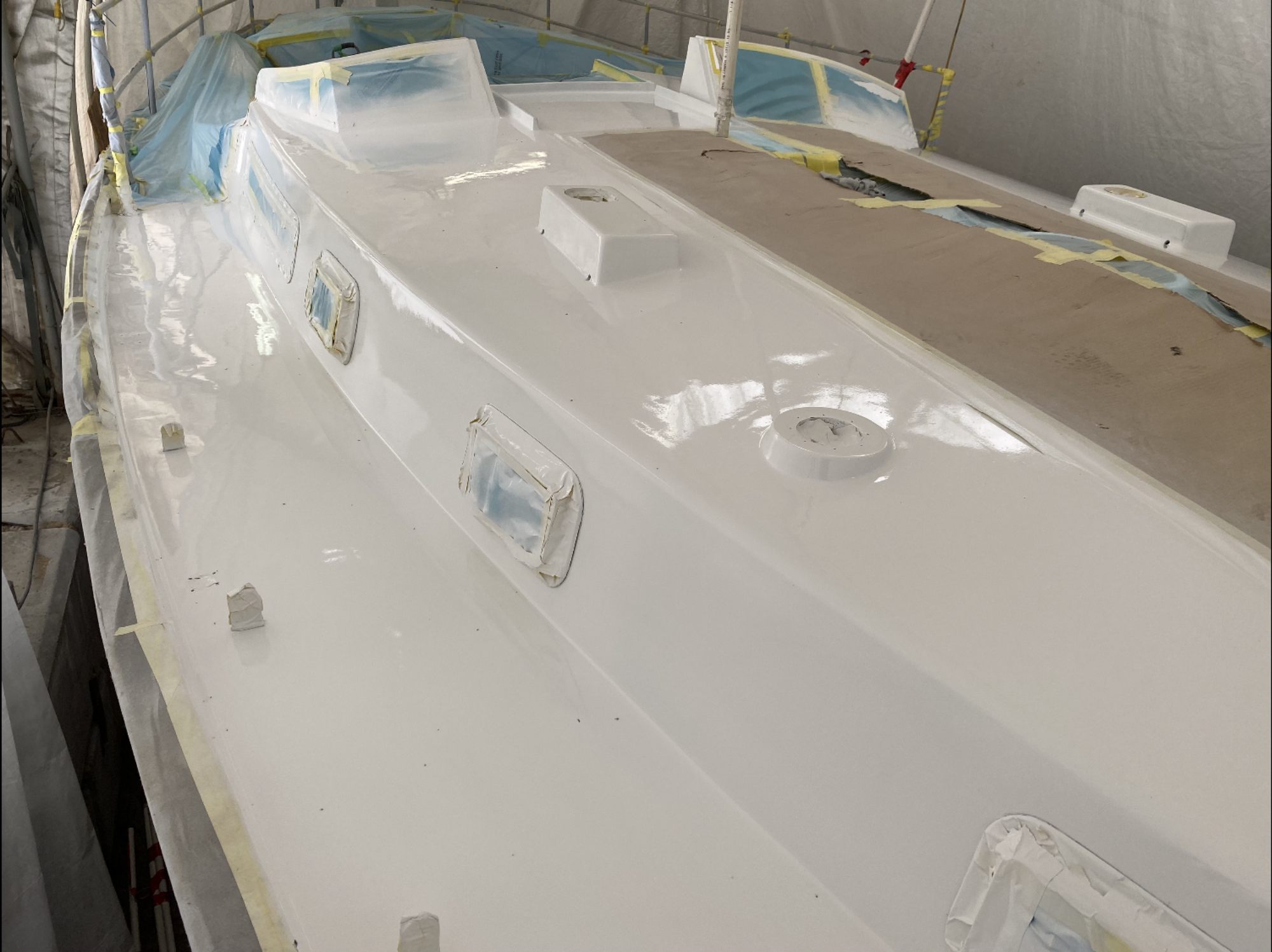
The Refit of a 1976 Whitby 42 Ketch – Akupara
Hi everyone,
Finally made a bit of progress on the blog, a lot of updates were made to a lot of pages, and we have added a lot of pictures to the gallery. They are in no particular order right now. Take a look around and enjoy!
To all boat owners everywhere. If you have a deck leak, please take the time to address the situation properly to prevent unnecessary damage!
Akupara was built in 1976. That makes her 39 years old. We expect to find issues considering her age and that there have been several previous owners, which is why we are doing a complete rebuild which includes completely gutting the entire interior, electrical, plumbing, and mechanical. Had we just launched her as is, we would never have been aware of some of the more serious issues that we are slowly discovering. We knew we had a large foredeck repair coming and since then have discovered that the anchor locker bulkhead will need to be completely replaced, and yesterday as August disassembled the aft cabin, I had my first really good look at the mizzen main chainplates. The chainplates themselves have been replaced which is great, but they will need to be removed, and I will need to perform some surgery on the aft head bulkhead and aft dressing table bulkhead. It seems that whoever did the replacement, removed the old chainplates and discovered some wet plywood in the bulkheads. Rather than completely cut out the wet wood, and glass in a proper repair, they simply used a hole saw and drilled a bunch of holes enough to chisel out the immediate area of the chainplate, used some kind of a block of plastic and reattached the chainplate. I was stabbing it with a screwdriver to try to identify how big of an area will need to be fixed. Prior to that, it actually did not look that bad.
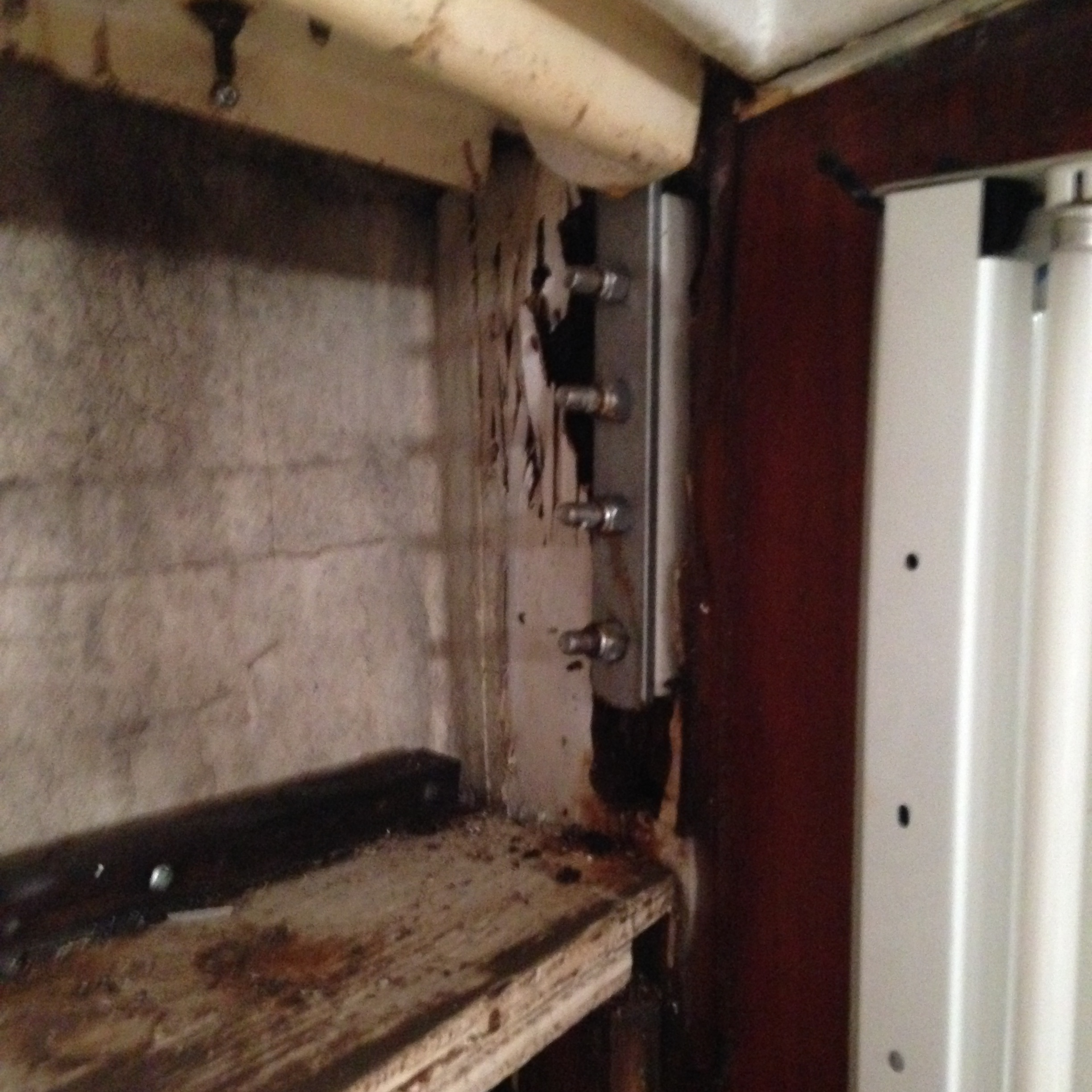 Thankfully, the actual knee that the chainplate is bolted to, which is on the other side of the bulkhead, seems to be solid and dry so the repair will be limited to replacing a portion of the bulkhead only. As well, the repair will be hidden inside the upper lockers in the aft cabin as since it is a rather tight area to get to, the repair may not turn out as visually pleasing as I would normally like. This does allow for a more robust repair though, which is good.
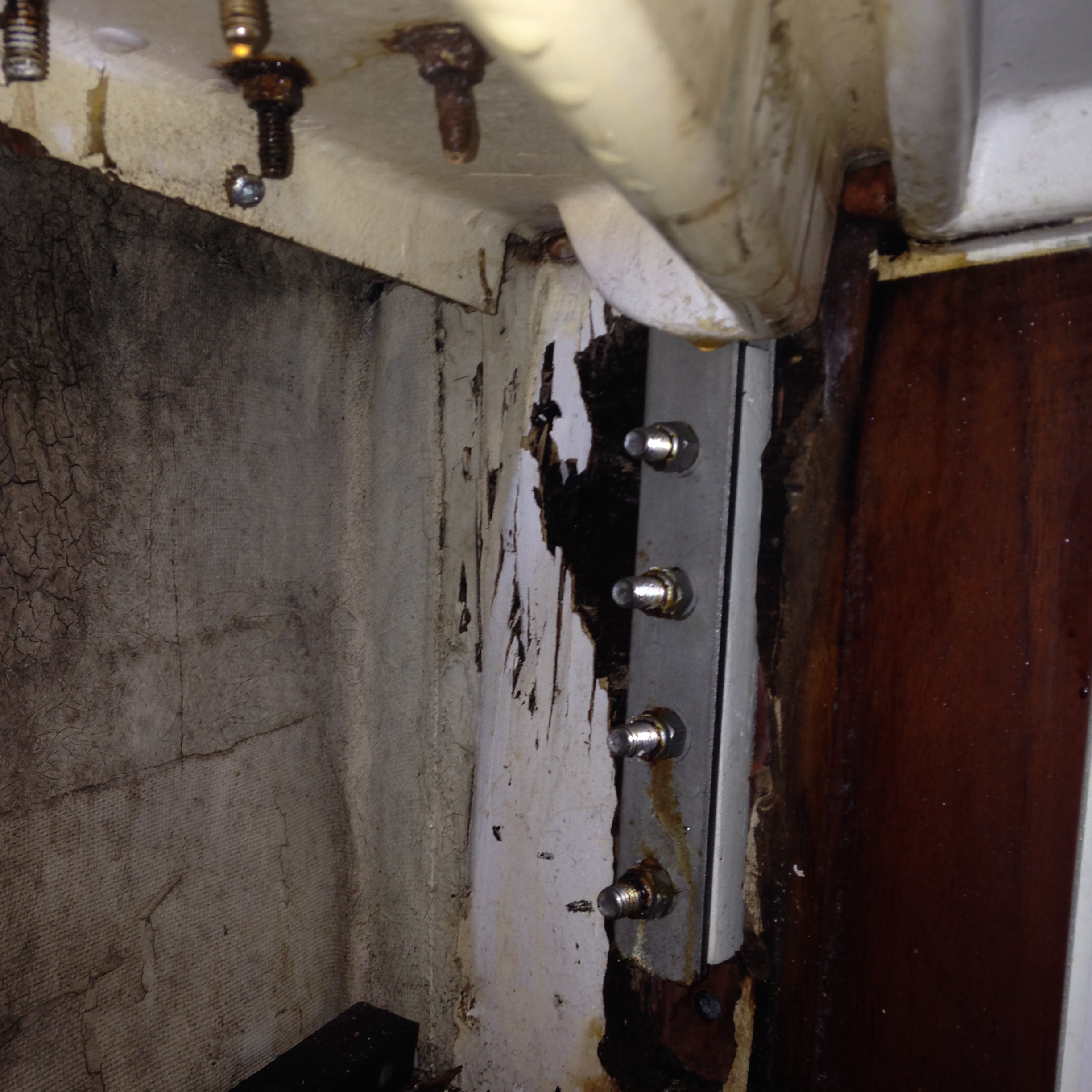 So, we have some more grinding and glassing to do but when we are finished, it will be as solid as it was originally. Did I mention that we will be using all marine grade plywood for repairs? Household plywood has absolutely no place on a boat.
Oh and there is also a very good look at some of the condition of the deck fitting bolts. You can actually see water dripping from one bolt. These are for one of the stanchions which we have not removed as of yet.
For those of you who have been following along, you may be wondering why we seemed to switch to dismantling the interior. We decided that we needed to gut the interior as soon as possible to allow Akupara to thoroughly dry out inside. All of the “pegboard” that lines the hull inside the lockers is simply trapping moisture, and hiding cockroaches 😉 and needs to be removed asap and given a chance to dry as well as quite a few pieces of wood.
I was in the aft cabin helping August remove a few difficult screws and Paige and Andrea were in the main cabin and forward head working away when the scream finally came. It was the admiral who discovered our stowaway! I quickly made my way forward with visions of blood or some other trauma flashing through my mind. How do you hurt yourself with a screwdriver was all I could think. As I arrived on the scene I found the Admiral attempting to mount a courageous attack. There she stood in her finest combat attire, a screwdriver in one hand and the vacuum in the other. She was definitely shell shocked, and seemed unable to make the final offensive or lead her troops into battle. I hurriedly glanced at Paige to see if perhaps she was the victim, however a quick glance revealed no blood there either. I didn’t understand. What had happened? Where was the injury, who had suffered it? Very slowly the admiral pointed with the screwdriver. In almost a whisper she slowly mouthed the dreaded word. Cockroach!
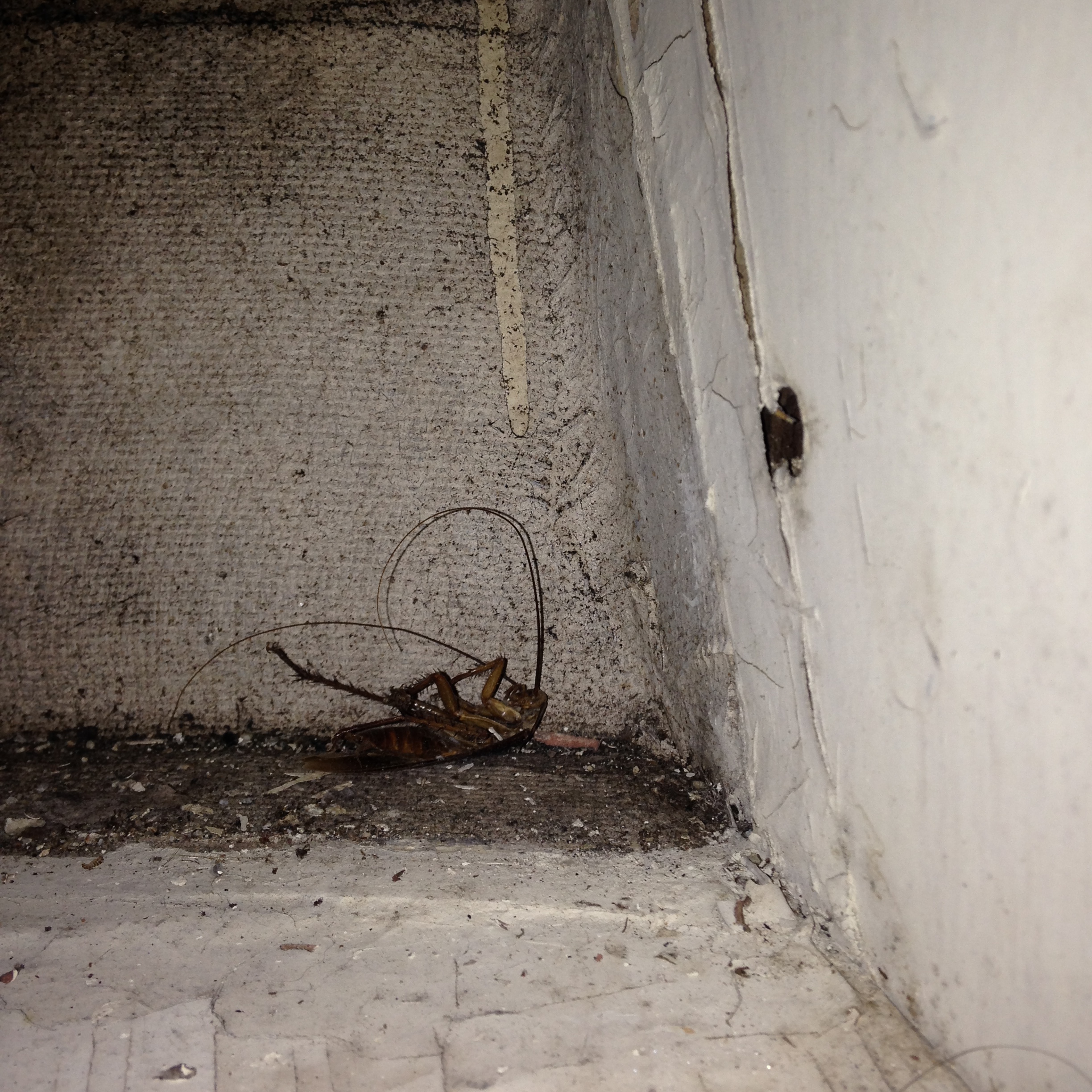
Now to be honest I am not the greatest fan of creepy crawly’s either, but this is our home damnit, or will be eventually and as the Admiral, I would expect that upon finding a stowaway, she would immediately take charge and either arrest said stowaway, or make them walk the plank or something, but in this case, I assume she felt that it was time to delegate responsibility to those beneath her. Paige, was already at the top of the companionway preparing to abandon ship and refused to come below to meet Carlos. I quickly grabbed the vacuum and put an end to Carlos forever. Or at least until we have to empty the vacuum. Well, of course Carlos mounted a strong offensive and absolutely refused to go down the hose, and as soon as I shut the vacuum off, he fell out of the end of the nozzle onto the cabin sole. This inspired another round of “war cries” from the peanut gallery, brave souls they are. By this point now, The admiral, August and Paige were all gathered around the companionway and I could tell by the look in their eyes that it was each man for themselves and they would take no remorse in leaving their comrades behind, or trampling overtop of each other in order to make their escape.
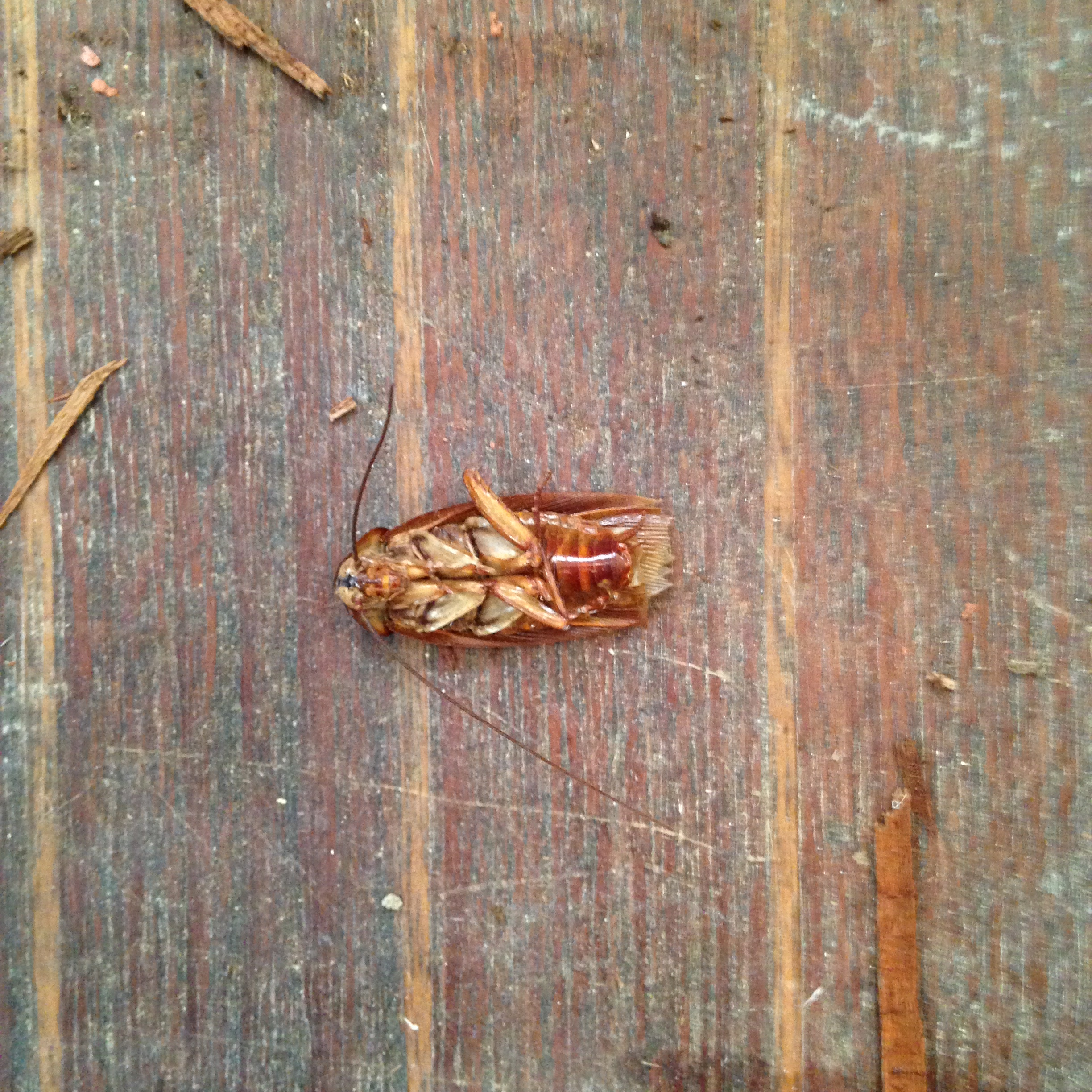
Eventually the screw that we had sucked up previously, fell out of the hose as well, and both screw and castaway were consumed by the trusty shop vac.
By the way, I forgot to mention that Carlos the Cockroach appears to have been dead for several years. Carlos, prior to his passing, found the only dry spot in the entire boat, tucked way in behind a piece of the pegboard that lines the inner hull, inside the head cupboard and was slowly mummified
It was only a matter of time before we found him. All of the indications were there, and the further we dug into the bowels of Akupara, reducing and eliminating places of cover and discovering new exciting secret locations, the higher the odds were that we would discover him!
We have found approximately 30 cockroach motels and at least 10 spots where there was cockroach paste, that brown sticky poisonous bug killer had been smeared in high traffic areas. So we knew at one point in time Akupara had a serious case of stowaways.
So the good news I guess is that the previous owners took the issue seriously, but the bad news is that with all of the hiding spots, we were still a little worried about finding them. Thankfully, when we finally did find Carlos the Cockroach yesterday, his days had ended peacefully a long time before.
I firmly believe that there is a common misconception out there that stainless steel is a miracle material that will never stain, never rust, and never corrode.
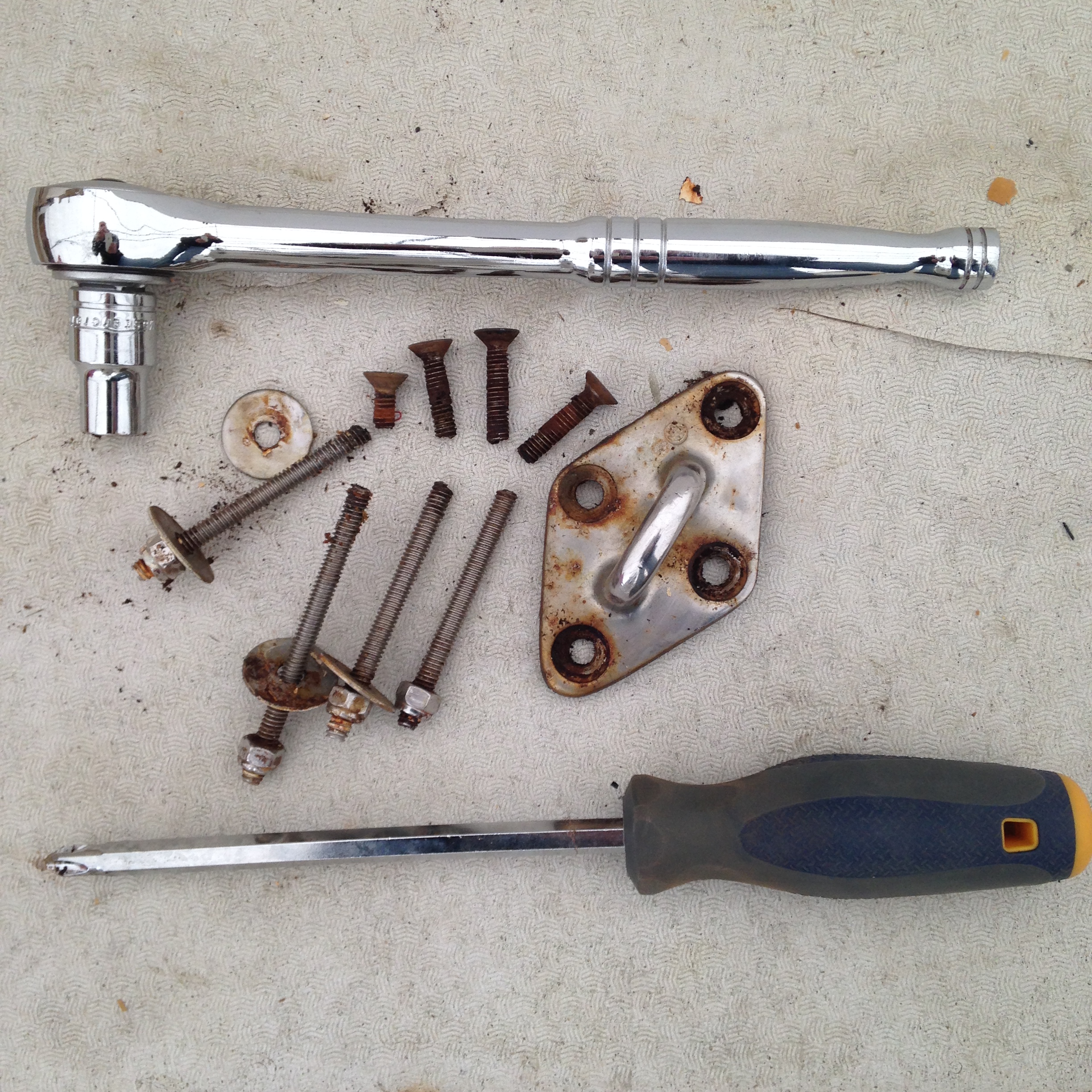
After removing every screw, bolt, nut and washer from Akupara’s decks I can assure you that this is not true. Every single screw, bolt, nut and most washers was either rust stained, partially rusted, or completed corroded all the way through. We broke as many screws as we managed to successfully remove, when trying to get them out.
Some of them we were able to remove after they broke, but some of them still need to be removed. Almost all of the corrosion starts approximately 1/16th of an inch below the deck. So it isn’t on any visible part, and if you could remove whatever fitting it is without removing the screw, you would not be able to see anything wrong. However, back the screw out 1/16th and the issues start to appear.
When we begin reinstalling things, we hope to avoid some of these issues with the way that we will countersink the deck and add little rings of butyl tape around the bottom of each screw. When the time comes, we will document the process on the sight for everyone to see.
Take this as a warning to anyone who doesn’t re-bed their fittings on a regular basis, perhaps it is time to check all of that stuff?
We had our first fellow Whitby 42 owners onboard Akupara today! Denis and Rosario from “Counting Stars”. They are new owners as well and what a pleasure meeting and spending the afternoon with like minded people! It seems that most people who pursue and eventually purchase a boat of this pedigree have somewhat similar dreams, and no matter the specific destination, they all involve bluewater.
Their Whitby is in much better condition than ours is currently but they were extremely gracious and were able to see beyond the dirt and mold and see Akupara in her eventual glory. We eventually went out and had lunch and a beer together and swapped stories of adventures past, both offshore and onshore and our dreams of adventures still to come. Of course it wasn’t long before talk turned to “Blue” jobs and “Pink” jobs, but we had a lot of fun! 🙂
This is what it is all about. Meeting interesting people who share a common goal. It doesn’t matter where you come from or what your background is, whether you are a doctor, lawyer or an Indian Chief, all that matters is that you share a passion.
A lot of us may never realize upon seeing ours dreams fulfilled. It is a sad truth. But ultimately, is it the completion of, or the adventures to get there, and who you get to share it with, that makes for a successful passage?
And since I am being sappy, I want to share my favourite quote.
“To be truly challenging, a voyage, like a life, must rest on a firm foundation of financial unrest. Otherwise, you are doomed to a routine traverse, the kind known to yachtsmen who play with their boats at sea… “cruising” it is called. Voyaging belongs to seamen, and to the wanderers of the world who cannot, or will not, fit in. If you are contemplating a voyage and you have the means, abandon the venture until your fortunes change. Only then will you know what the sea is all about.
“I’ve always wanted to sail to the south seas, but I can’t afford it.” What these men can’t afford is not to go. They are enmeshed in the cancerous discipline of “security.” And in the worship of security we fling our lives beneath the wheels of routine – and before we know it our lives are gone.
What does a man need – really need? A few pounds of food each day, heat and shelter, six feet to lie down in – and some form of working activity that will yield a sense of accomplishment. That’s all – in the material sense, and we know it. But we are brainwashed by our economic system until we end up in a tomb beneath a pyramid of time payments, mortgages, preposterous gadgetry, playthings that divert our attention for the sheer idiocy of the charade.
The years thunder by, The dreams of youth grow dim where they lie caked in dust on the shelves of patience. Before we know it, the tomb is sealed.
Where, then, lies the answer? In choice. Which shall it be: bankruptcy of purse or bankruptcy of life? ”
― Sterling Hayden, Wanderer
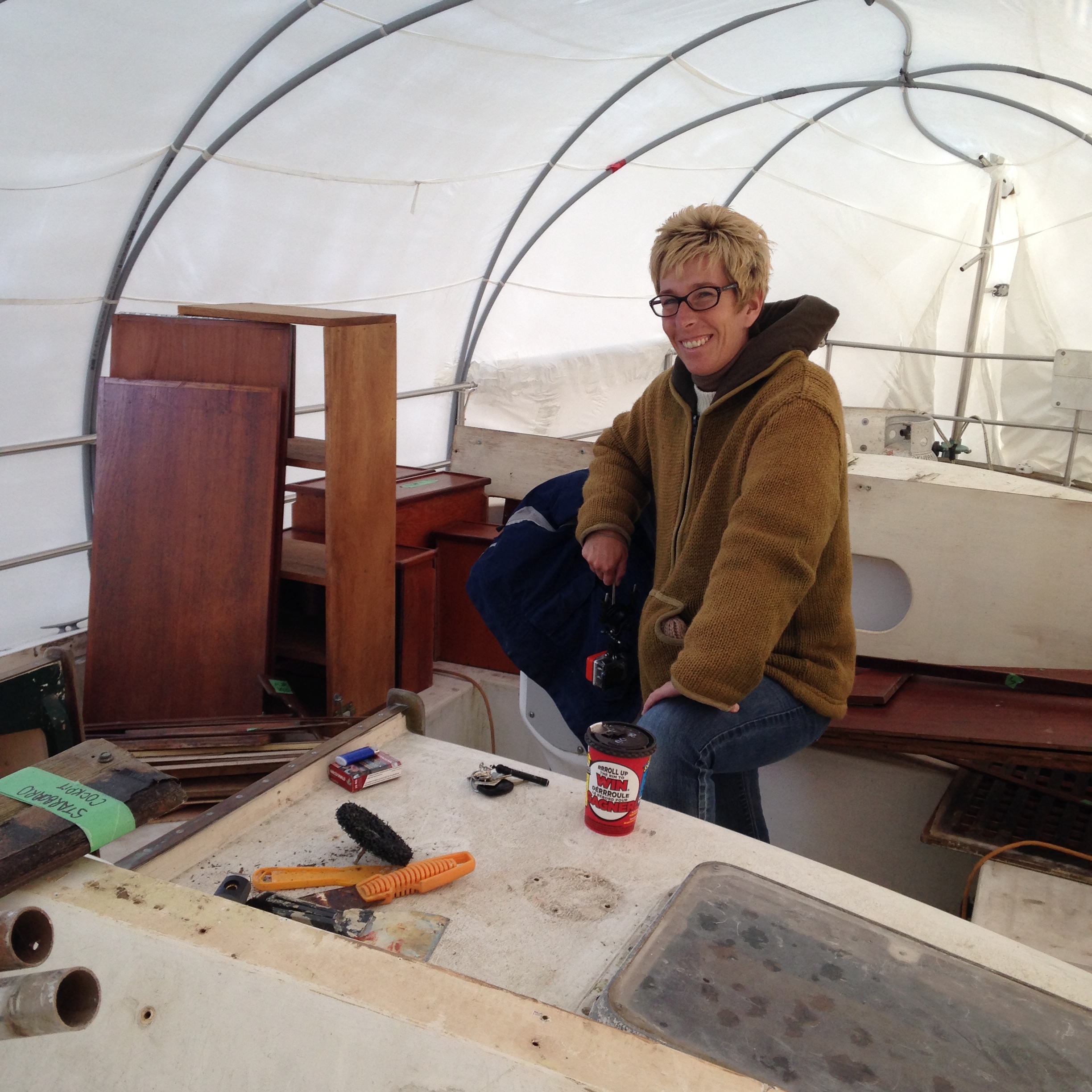
Sometimes you just have to stop what you are doing and switch to something else and that is exactly what we did.
We had an errand to run prior to going to Akupara this morning, we dropped off the 2 scuba tanks that were on board when we bought her to see if they were still good. 1 was toast but one passed the internal visual and appears to be salvageable so we left it to be hydro tested and have new seals installed. Of course since we went in with 2 tanks there was no way I could leave without 2 tanks so I purchased a good used one that passed visual and hydro last month. We pick up the original one next weekend.
So when we arrived at Akupara we just weren’t in the mood to fight with nuts and bolts on deck fittings so we changed things up and began dismantling the interior starting in the v-berth.
Behind the ceiling in the v-berth |(ceiling refers to the wood slats that are on the sides of the v-berth) we found 40 years of dust dirt and grime. I don’t think anyone has ever tried to clean behind it before and it is so black that the only way I can think to clean it off is to pressure wash it, so as soon as we have all the rest of the interior out, that is exactly what we will do.
We also marked out the areas on deck that we will need to re-core and we did 2 test spots with the belt sander to see exactly how hard it is going to be to sand it down. Thankfully, it seemed to go fairly well and in 15 minutes I had about 3 square feet sanded down quite nicely with 80 grit.
Tomorrow we will try to resume the removal of the deck fittings.
We have also decided to take out stock in a stainless steel screw company as we have probably discarded a full bucket of screws by now and will need to replace all of them. 😉
http://youtu.be/C0L7NeWkQlM
SOLAS…
Safety of Life at Sea…
I have a sneaking suspicion that although a lot of us talk about the worst case scenarios, few of us actually prepare and maintain a state of readiness to that effect.
Take the life raft that was on Akupara when we purchased her. The hard case was so weather beaten that it was impossible to make out a manufacturer, a last date of inspection or any other relevant information. The rubber seal that is in between the two halves of the case was hanging partially out and to top it off, the entire thing was tied with an old piece of rope to 2 wooden chocks that did not actually fit the life raft canister and had rusted screws to boot. One good wave and the entire thing would have been washed overboard.
The emergency watermaker was found way down in the bowels of the boat and there was no clear evidence of a proper ditch kit.
This is not how we run a ship and there was no way I was going to trust the lives of my family to an outdated, unknown liferaft, so I set it in the backyard and pulled the cord.
Now this isn’t the first time I have done this.
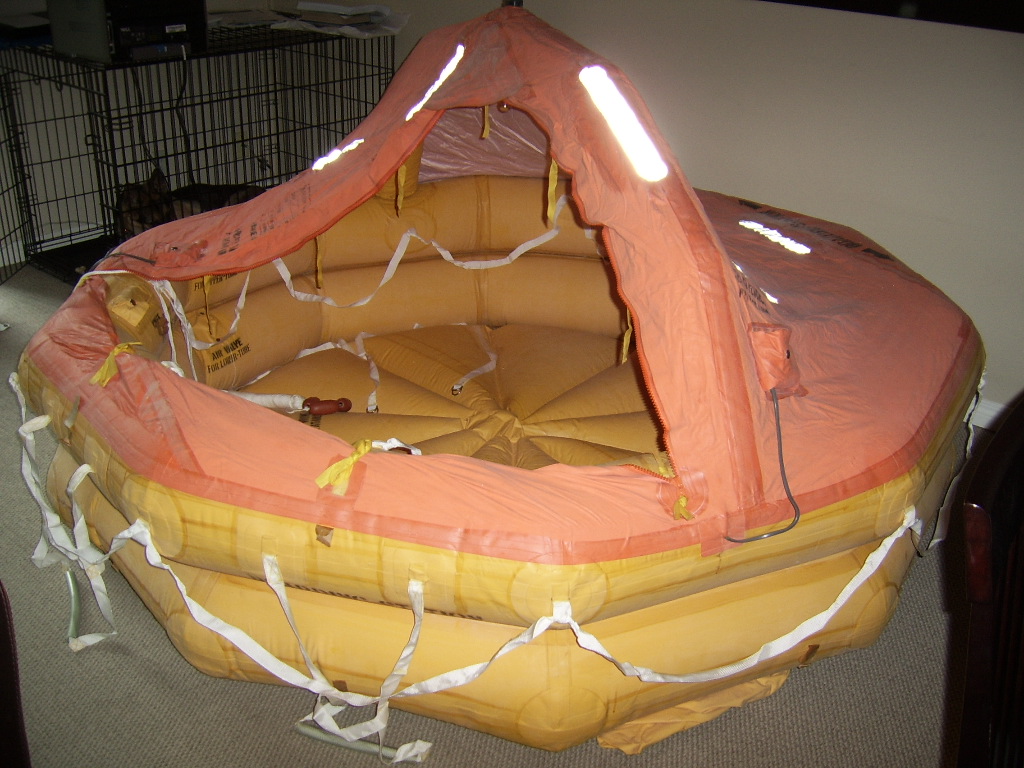
I purchased an old used life raft several years ago at the same time we purchased the brand new life raft for Mara II, our Alberg 30. I purchased the old one to give the family a chance to actually see and play with a liferaft in order to give them a bit of familiarity with it and with what it actually contained.
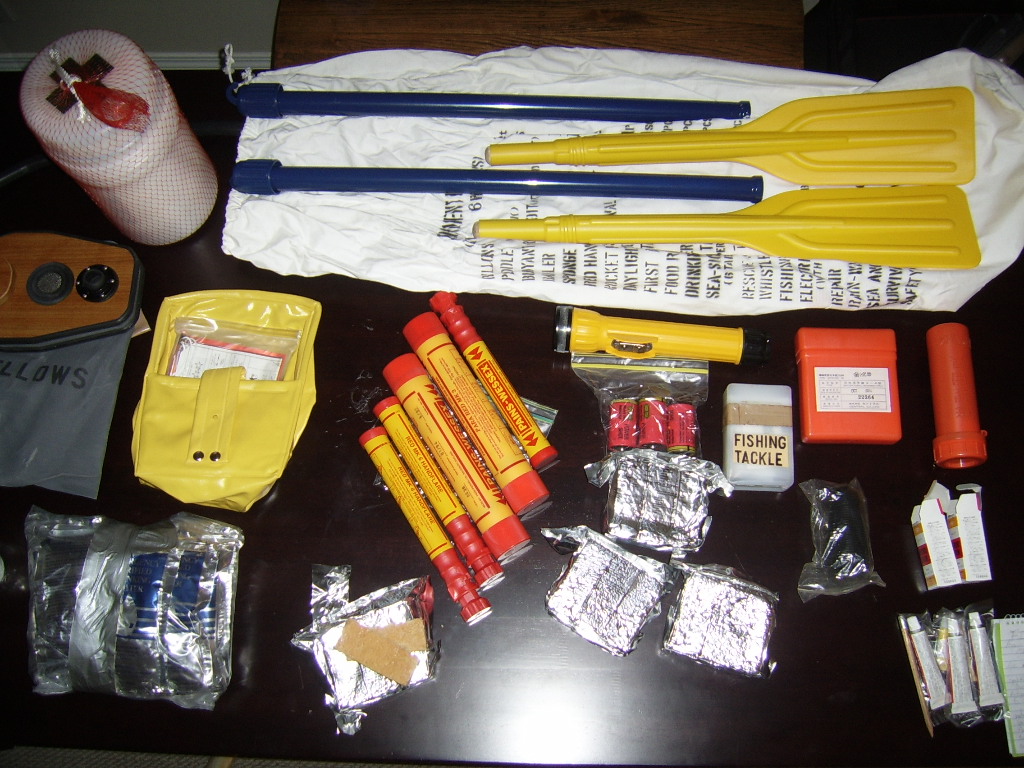 That life raft was actually stocked fairly well and had semi useable equipment inside of it. Akupara’s liferaft on the other hand had very little useable stuff inside, and what was there, was either soggy, rusted or covered in battery acid from the leaking D cells for the flashlight.
One thing that does amaze me, is that both of these old life rafts actually inflated on the first pull.
Inside the canister is a date from 1993 so I assume this was the last time it had been repacked, which means it would have expired in 1998. Then again that could also be the expiry date itself. So the long tall and short of it, is yes the raft inflated, no I would not trust my life to it after seeing it’s condition. I will put it up for donation on craigslist.org, maybe someone has a use for it OTHER than as a liferaft!
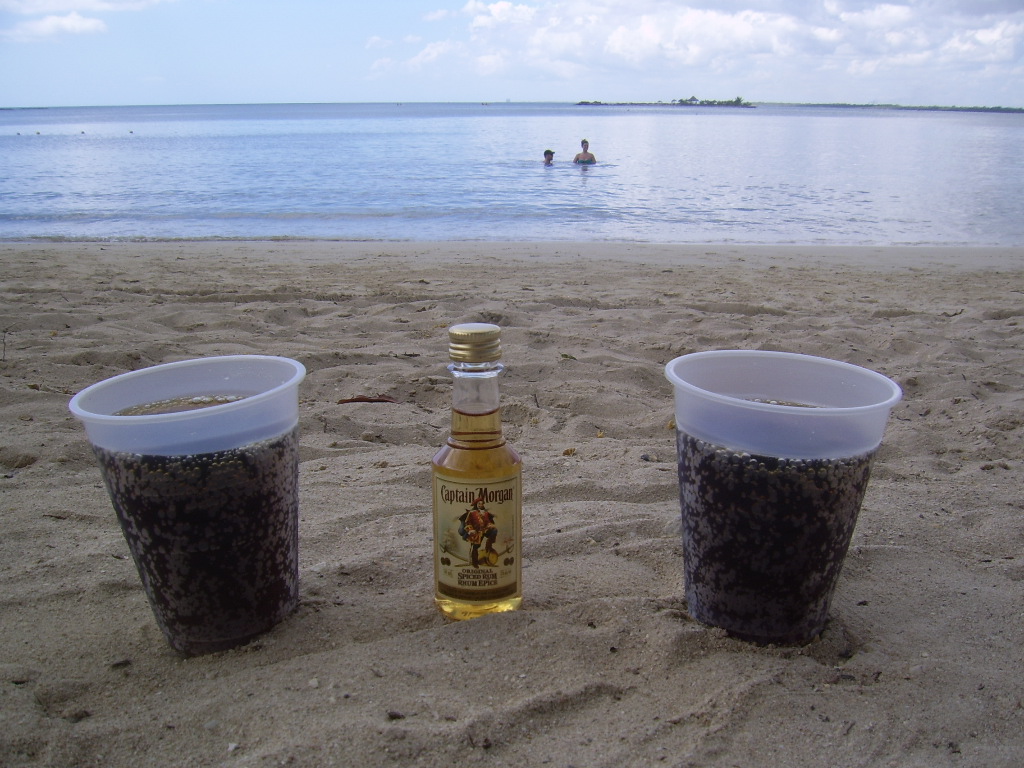
The last six months or so have been extremely busy for both Andrea and I at work and at home, not to mention our purchasing Akupara and the beginning of the restoration. The next six months will be just as busy if not worse so we both decided a quick getaway was in order.
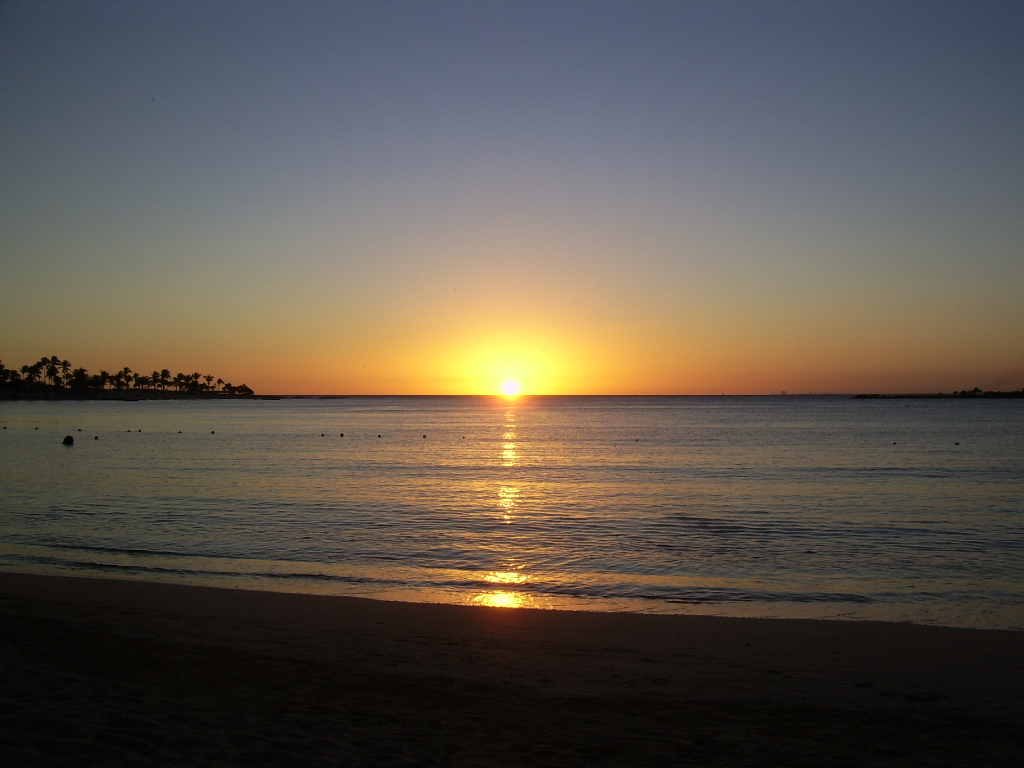 We went to our agent, picked something reasonably inexpensive and 7 days later were on a plane to de-stress in the sun and the sand. Of course this means that in effect we lost 2 weekends of work time, but it was well needed.
We actually did not talk a lot about Akupara during our trip which was nice, although when we did, it was interesting how both of us were thinking along the same lines. We talked briefly about how important it is going to be to get the watermaker working properly. This was reinforced by the fact that we were in the Dominican Republic which is known for bad water and a lot of people on the resort were feeling the results of that. Even though they had not directly drank the water, they had still been exposed through the ice in their drinks. Which led of course to a brief discussion on the importance of ensuring the refrigeration and freezer needs to be 100% as well.
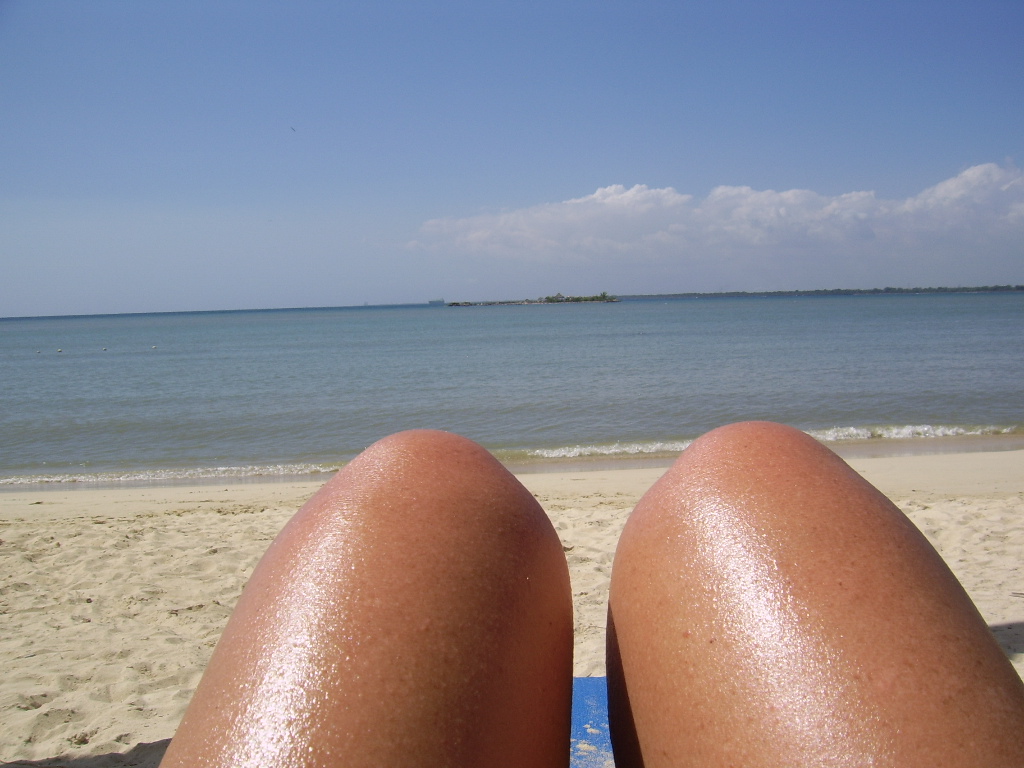
By day 3 the admiral actually made the statement “I don’t think I can stay in the sun any longer, I need to find some shade.” Tada – the dodger and bimini is going to have to be well constructed to allow for lots of airflow and yet provide for privacy as well. At night in the hotel room, we eventually gave up on the air conditioning as it was way too loud, but that also brought up the question of, as we grow older, are we going to need air conditioning to sleep. At this point we can manage just fine but it also seems to help with the humidity as well so perhaps we should investigate it.
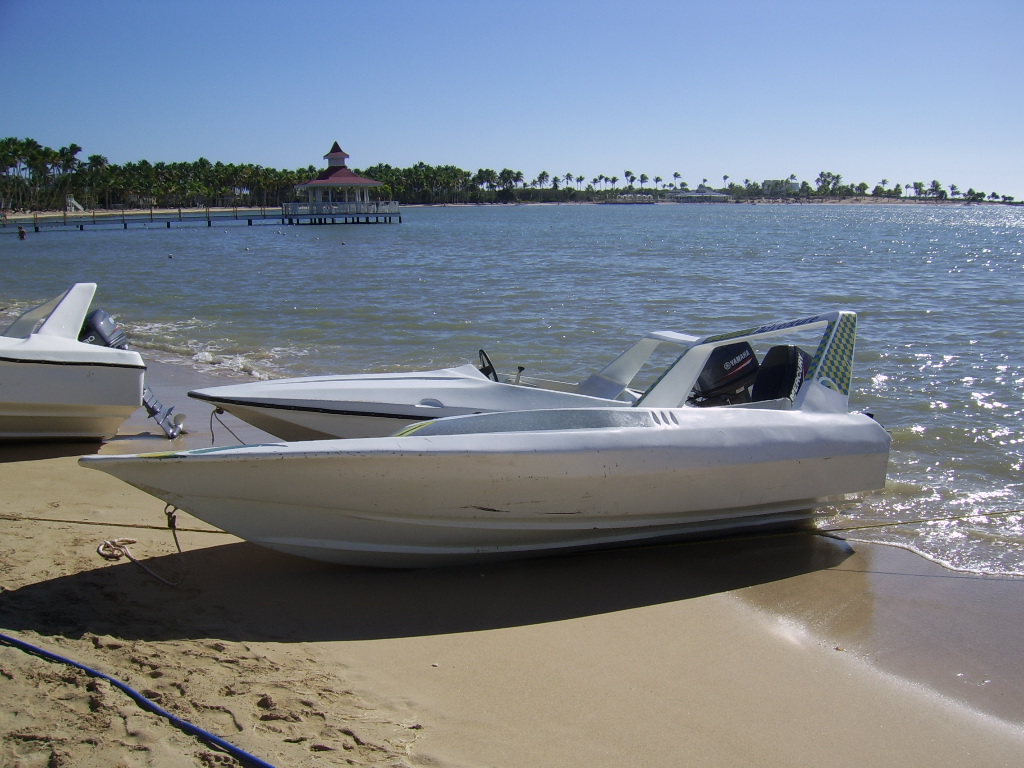
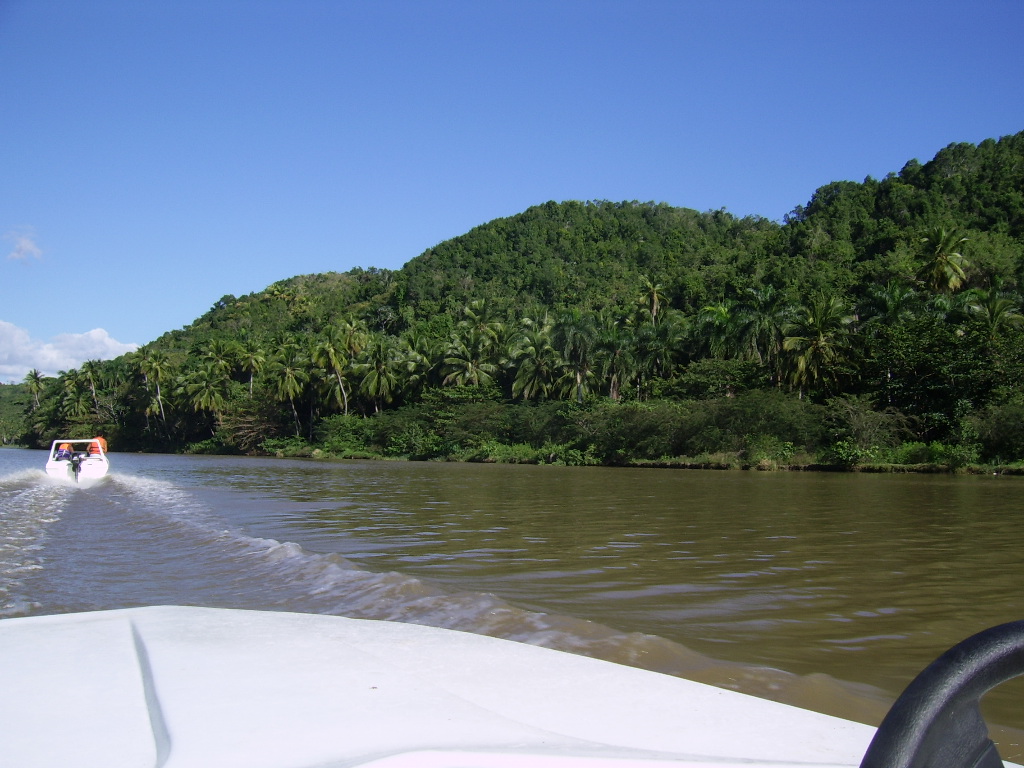
We rented a little speed boat and went on a guided trip up a local river to experience the “true” island life. It was a lot of fun to be blasting around and seeing the jungle from the river side. Almost felt like we were in the movie Apocalypse Now, parts of which were apparently filmed in the DR, without all of the shooting of course. Hmmm, maybe we need to upsize the dinghy and outboard. Our RIB is 9 feet with an 8hp motor, but would it ever be nice to have a steering wheel as opposed to a tiller on the outboard.
As our eventual goal is to retire aboard Akupara, all of these little things are actually extremely important to us and the wrong decision now, when we have the time to make the right one, could possibly come back to haunt us, and I know for a fact that I am not going to want to start major repair projects or modifications in 31 degree Celsius heat.
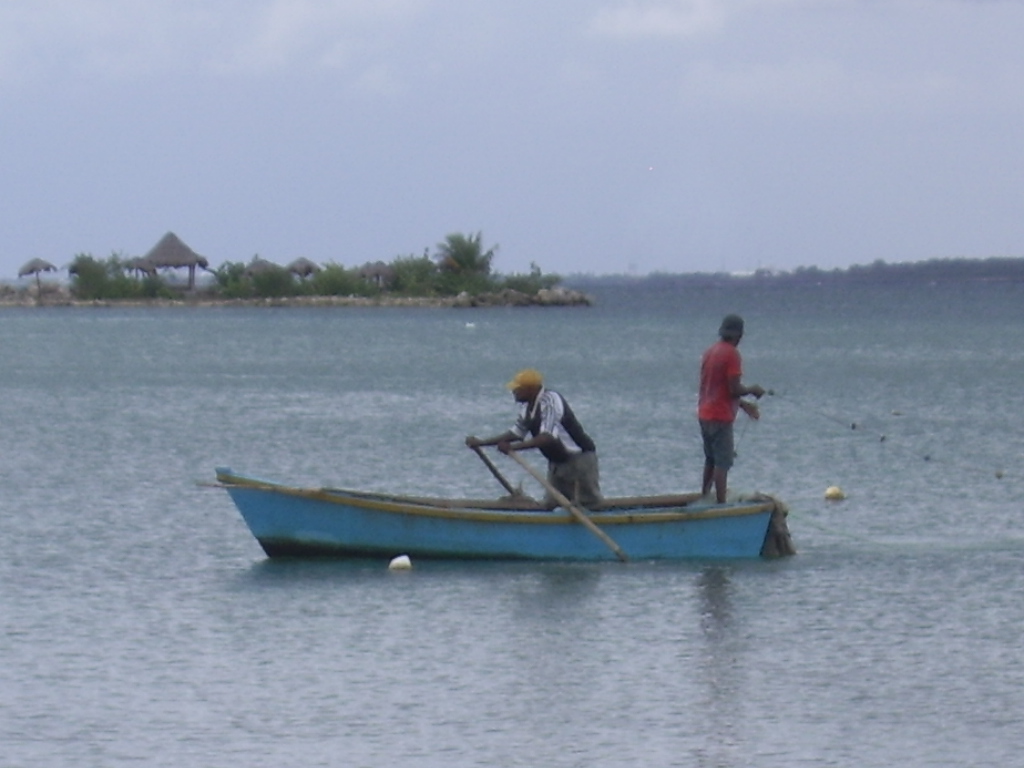
Most of the week there were local fisherman performing their daily activities in the bay in front of our hotel and I commented several times to Andrea how simple their life seems to be. Not easy by any means, but simple. All of them were in old boats with peeling paint and leaking seams, some without engines, none with watermakers, refridgeration, freezers, air conditioning, dodgers or bimini’s, high speed outboards or any of the rest of the fancy stuff we “need” and yet they get by. Our plan is to eventually make Akupara our home as I have said, and part of the reasoning for that is to make life more simple and therefore more enjoyable, and yet all of our needs seem to do the exact opposite. This planning process as we refurbish Akupara is going to be a balancing act of need versus want and complexity versus simplicity. It is hard to make a conscious decision to give up something, but then again, if it makes life too complicated in the first place, is it even worth it?
I guess this trip actually had a lot more to do with Akupara and her refit than I thought! I wonder if I can claim it as research? 😉