New versus old

We are leaning more and more towards replacing critical components with all new systems. Originally we considered keeping the engine and having it overhauled but as we get farther and farther down this path, we are leaning farther and farther towards a new one. This same thought process is happening with everything on Akupara.

Some would argue why spend all the extra money when you can save a bunch by fixing and reusing what is already there. I agree with this thought process completely but, the last thing I want to do is to be in a nice tropical anchorage and be worrying about my 45 year old engine, or the 45 year old wiring that is behind the walls and that I can’t see.

This is going to be our last big boat and we plan on keeping it for a very long time and we would like to have as many years as possible without having to worry about old systems.

The other side of this is that yes we could keep the existing engine and have it rebuilt, but how long will it take to spend $5000? I would guess that the starting price at rebuilding is close to that, and it wouldn’t take long to be creeping up to the $10000 price range. One or two major problems after that and we have just spent the cost of a new engine, on a 45 year old engine.

This of course opens up a whole other can of worms as now we are going to have to start thinking about fuel tanks as well. If the engine comes out, we might as well replace the 3 tanks while we have the access rather than discover a problem a year down the road.

We are still trying to feel our way through this decision process, but all of the indicator lights are currently pushing us towards going all new. And hey, in the end we will have a brand new 1976 Whitby 42, how many people can say that? 😉

Now, I need to start offsetting the cost of the new engine so who needs parts for a 60hp Ford Lehman ?? I will even consider selling the engine whole for $800, if you pay the costs associated with removing it!

The ugly side of painting.

IMG_0830Sometimes things just don’t turn out the way you planned.

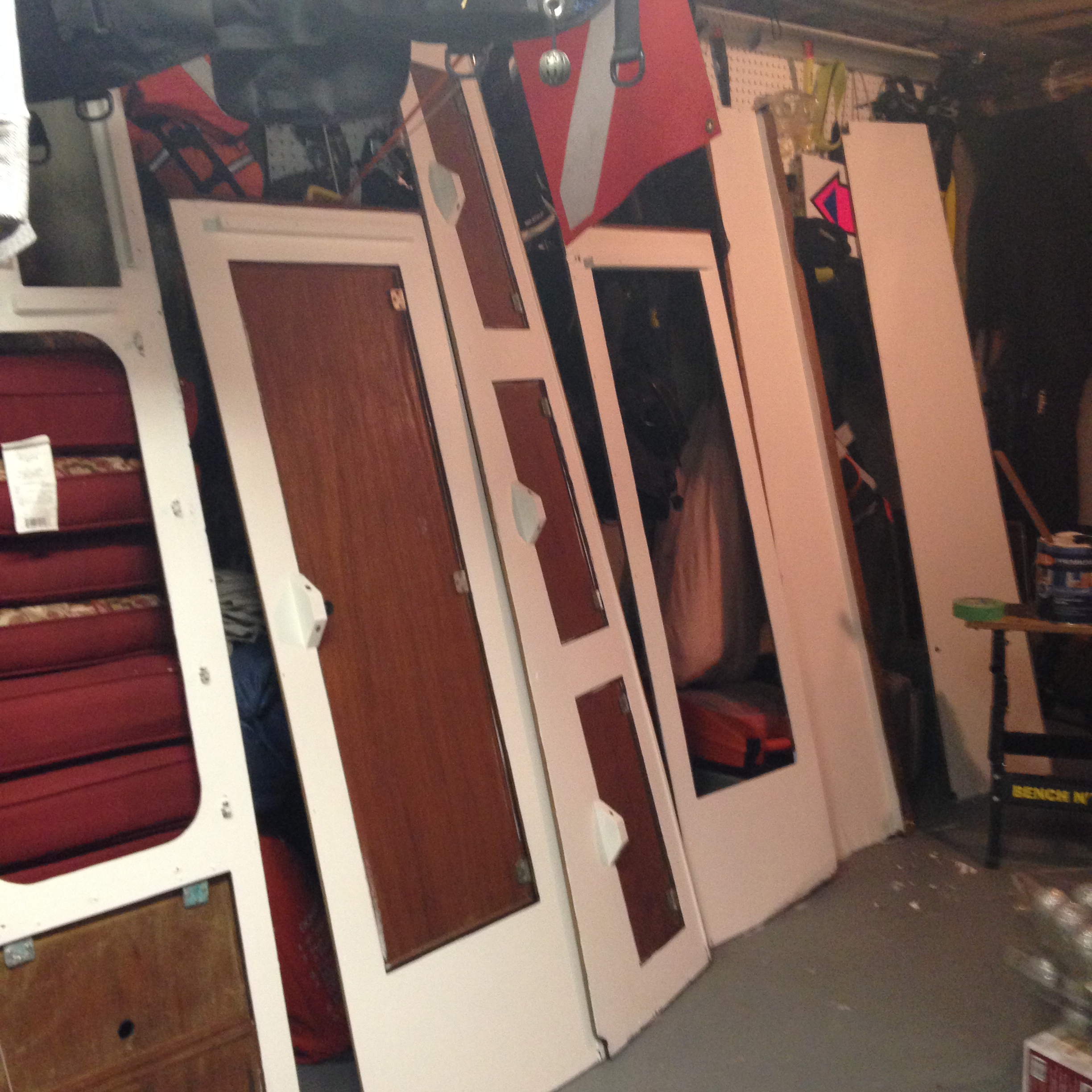
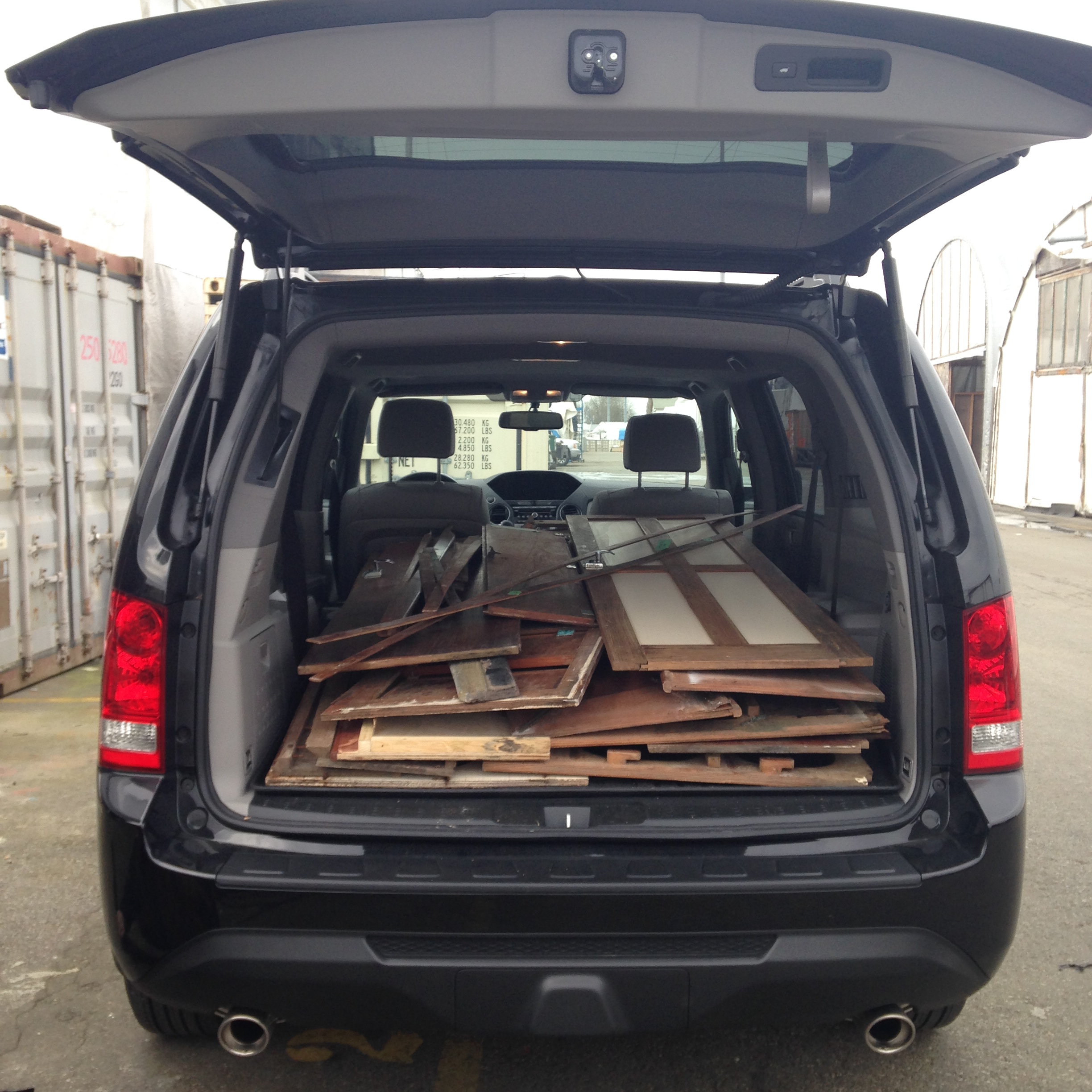
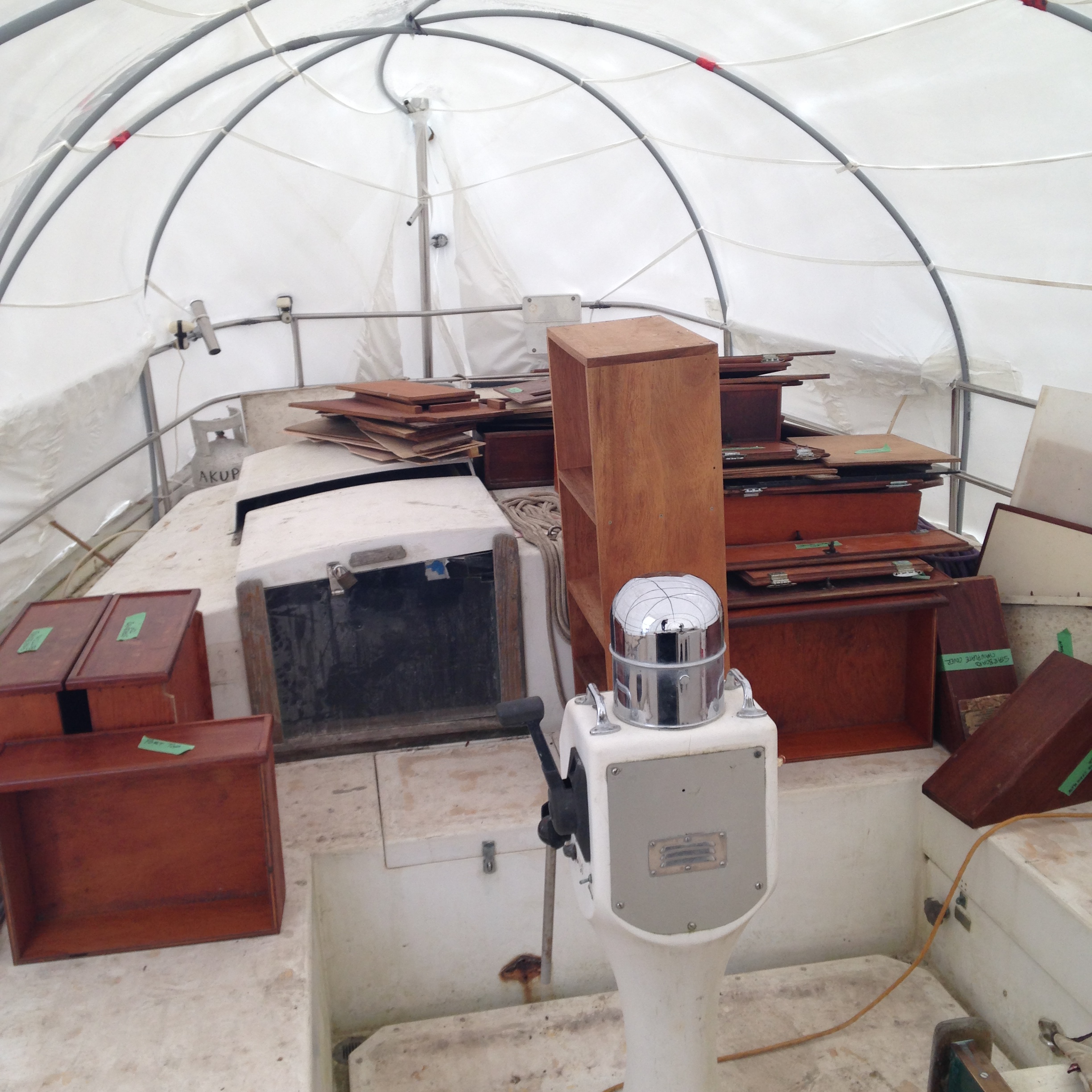
This weekend was one of those things. We didn’t even make it to Akupara, somehow other things got in the way. That being said, we did manage to get 3 coats of paint on the back side of all of the panels from the interior. Why paint the backside you ask? Well, because they had never been painted and to be blunt, they were pretty gross. Our basement is getting smaller and smaller everytime we turn around. Behind all of the panels in the picture is some of our scuba gear, where in hell we are going to put all of this stuff on Akupara I have no idea. I think we need a bigger boat 😉

Two boats ago we had an Alberg 30, and for those of you who do not know, the Alberg 30 and the Whitby 42 were made at the same place, Whitby Boat Works. Having previously owned the Alberg 30, I am intimately familiar with the way these boats are assembled, and both are done the exact same way. All of the panels are screwed in and none of them are painted on the backside. Personally I like the fact that when we re-assemble Akupara, we will know beyond a shadow of a doubt that every square inch of surface area that we can not see, is clean, painted, and is somewhat protected from mould and mildew.

The paint I chose to cover the backs of the panels is a standard exterior mildew resistant paint. OMG you say, why are you not using Marine paint? Well, to be honest, considering we just used over half a gallon simply to paint the backs of the panels, we could eventually go bankrupt buying paint alone. When it comes time to paint the interior of the hull, we will spring for a higher quality paint, however nobody will ever see the areas that we painted with the cheap stuff, unless they start removing panels any way, and some paint is better than no paint! 😉

Vamanos!

For as long as I can remember the Captain has always taken great care with his belongings. He will inspect them, he will gaze at them thoughtfully and once satisfied with all, he will allow himself to relax–all is well.

Let’s focus on the “he will inspect them” part of my last sentence. For as long as we have owned a boat and kept that boat in a marina the final inspection must take place prior to leaving for the work week. I completely understand that all systems must be checked before leaving, items gathered that may have been forgotten and perishables collected to come home or donate to other boaters that have more time on their vessels than we do.

My time estimation–15 minutes. You’re in you’re out. I have yet to understand how it takes the Captain an hour to be on his way.

I have developed a time ratio, if the captain says a task will take one hour I multiply by three, it’s a 1:3 ratio and I am usually bang on. Our youngest daughter Paige has caught on to this and we share a not so secret look between us when the Captain announces it’s time to go.

Akupara is sitting on the hard, all systems are down for the time being, we do not need to check bilge pumps, freezers or lockers. We need to put our tools away, lock up and climb down a ladder to our car and be on our way.

The Captain, always so thorough, must do a final walk through  of Akupara. If he has a flashlight in hand Paige and I inwardly groan. We have spent six hours on board what could he possibly be looking at now?

Yesterday was a great work day with an extra set of hands! Everyone worked hard and the Captain announced earlier than any of us expected that it was time to call it a day.

Paige and I exchanged a look.

To our amazement the Captain packed up, locked up and climbed down the ladder. As he loaded up the car with more treasures from Akupara I strolled over to a patch of sunshine at the bow of Akupara.  Car loaded, the Captain came to retrieve me, as he walked toward me his eyes slid away from mine to the pile of anchor chain piled beside me. In that moment I knew I had sealed the fate of all of us, I felt Paige’s eyes seeking mine, a look of disbelief in them, accusingly conveying “What were you thinking?”

Oblivious, the Captain inspected the chain at my feet with a critical eye. He decided it should be laid out in neat rows and measured. (which is practical–I know this). 45 minutes later he was satisfied, one last walk around Akupara and we were on our way.

I am uncertain if this is a male phenomenon or something unique to my beloved Captain. When you care about something and work so hard on such a project I can understand wanting to linger, to inspect, to set yourself right inside.

On the other hand, when the Admiral says “Vamanos” that means “Everybody let’s go!”

Captain’s Orders

The weather in Vancouver has been great the last two weeks and yesterday it was a true spring day. We made it to Akupara shortly after nine, with a full crew plus one and by midday we were working outside in the sun and the solar panels were actually putting a bit of juice into the battery bank.

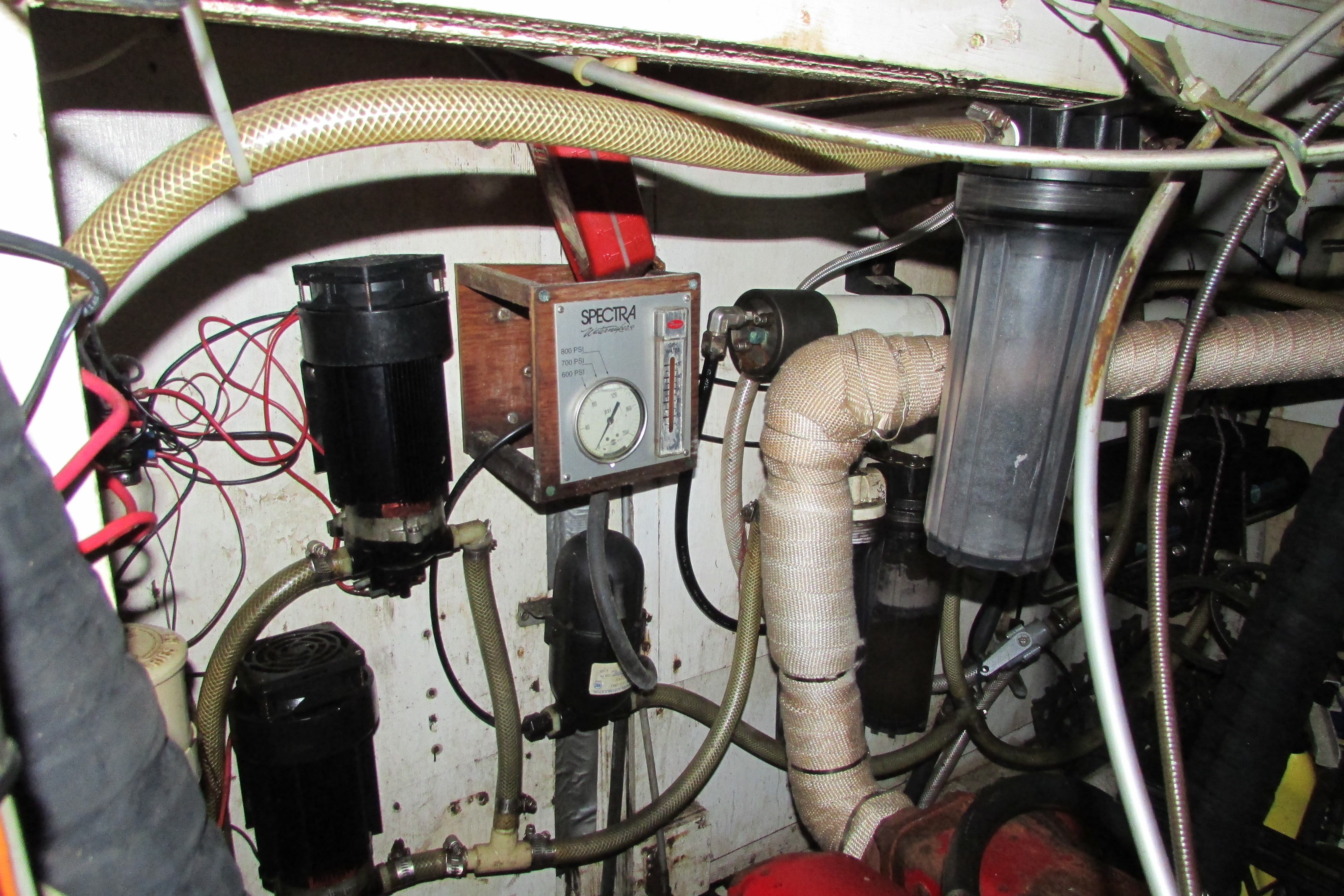
Graeme,  August’s boyfriend, came along after graciously offering his help and my accepting. We have known Graeme for a couple of months now and he is a great kid! It was a very nice change having a young man aboard and I took the opportunity to use his strength to assist with a few things that I had been putting off. I made my way into the engine room and Graeme followed. We tried to trace the water maker plumbing and eventually gave up and just started cutting the hoses. After many contortions and maneuvers we successfully removed the entire system and one of the old starting batteries that was slowly self destructing.  Now with me being the farthest into the engine room and Graeme basically blocking the door, there was no way that I would be able to lend a hand to the ladies without having Graeme move, climbing out of the engine room and making my way to wherever the issue was, so Graeme took up the role and did a great job. As we were removing bits and pieces we could of course hear the goings on in the rest of Akupara and the feigned attempts at removing difficult screws and what have you. After what seemed like an eternity, I asked Graeme to go see if he could help and off he went. Within 30 seconds he was back and the issue was resolved. Hmmm, I might need to keep this guy around!! 🙂

I am teasing of course, a lot of times the issues do boil down to strength, however, normally speaking the Admiral and the crew manage to successfully perform any task they take up and perhaps at times they may try a little harder than I would just to make the point. Of course it does help to prod them along with “girl” comments 😉

So anyway back to my story.  August is a lot like myself and when she attacks something, she is either 100% or not at all. The last couple of weeks she has been extremely helpful and accomplished a lot of work. As we have been stripping the wiring, this is what the ladies did while Graeme and I were in the engine room.

Before we started yesterday I basically gave everyone a primer that went something to the effect of cut and remove any wire that is not grey (part of the auto pilot), or the larger white ones(GPS antenna wires) the rest are fair game including the AC wires as I specifically had not plugged in the shore power.

Occasionally there would be a call of “Dad, what about the green/blue/black/purple one that goes into/under/over this “thingy”?

Now, I have looked at every wire and every square inch of Akupara so far and I will say that I have a pretty good idea already of what is where, but when I am sitting inside the engine room beside the port fuel tank the only point of reference I have is to listen to where the voice is coming from, and based on that plot a line of position to where the individual is. From that estimated position, I then try to ascertain what said “thingy” is and thereby deduce which wire is currently confusing them. I am pretty good at it after 19 years of marriage and 16 years of having kids, so the majority of the time my answers were  a precise yes or no and this system worked very well, or so it seemed.  It also helps that there were only 3 different wires that I actually wanted to keep but there is no need to tell anyone that.

At the end of what I thought was a very fruitful day, I was making my rounds through Akupara prior to locking up and identified two little points of miscommunication. The port solar panel wire, which I do admit is black and red had been cleanly severed and to my amusement so had the main shore power cable from the back of the receptacle to the panel. The answer given when the question was asked was, “You said to cut all the black wires!” Damn.

I also recall the exact moment that the shore power line was cut and I also recall giving a firm yes when asked the question as it went something like this. Dad, what about the big black wire that goes through the cupboard. Based on my plotting I ascertained that August was at the starboard dressing table, which may have been a degree or two off. I also recall Graeme going to help with the big wire cutters. I also recall not clearly explaining that I wanted to keep the shore power available so that I could charge the batteries. 🙂

Oh well, it was going to come out sooner or later anyway.

Summary of yesterdays work:

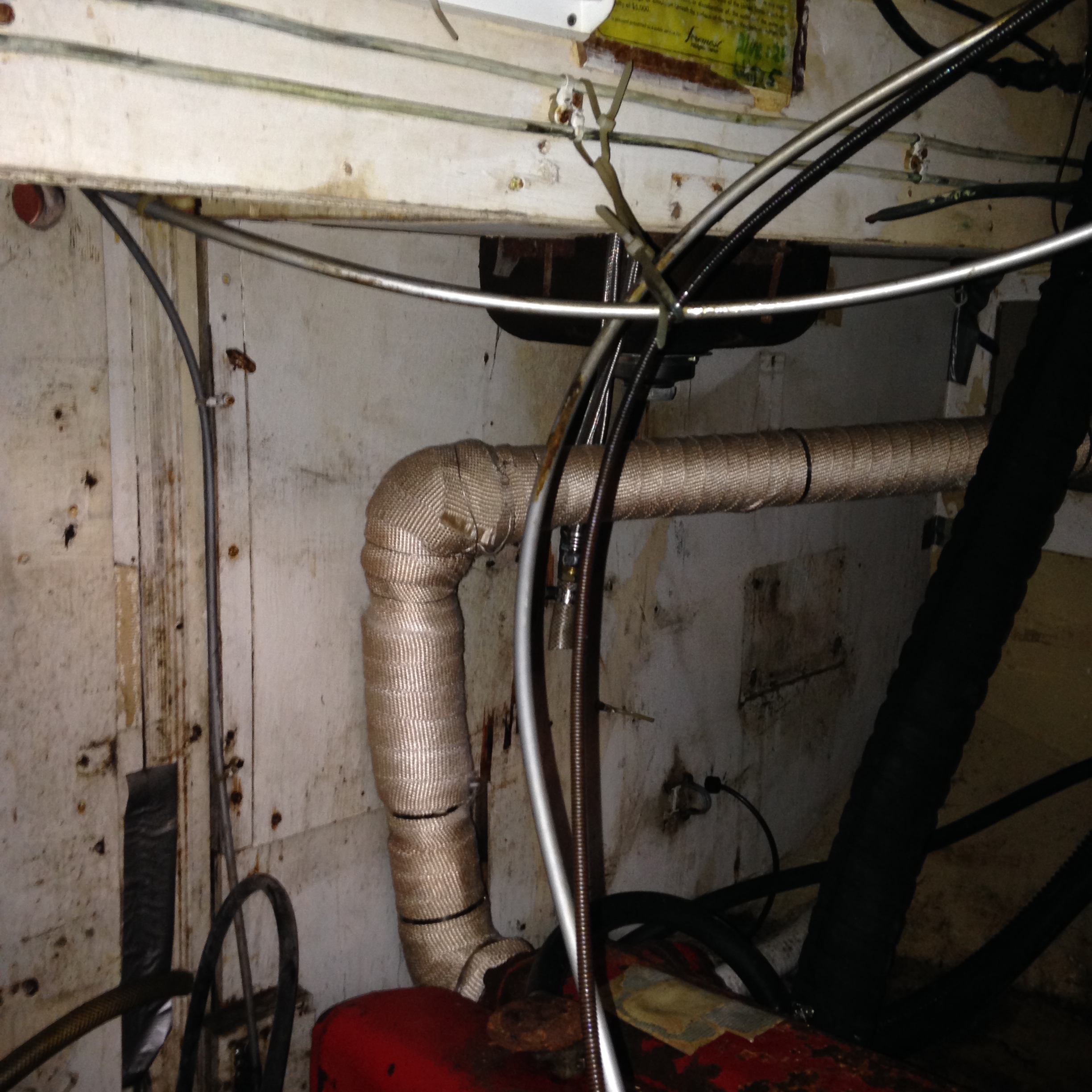
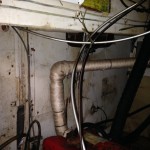
Water maker removed (identified another area of rotten plywood between the engine room and the aft head)
IMG_4895IMG_0816


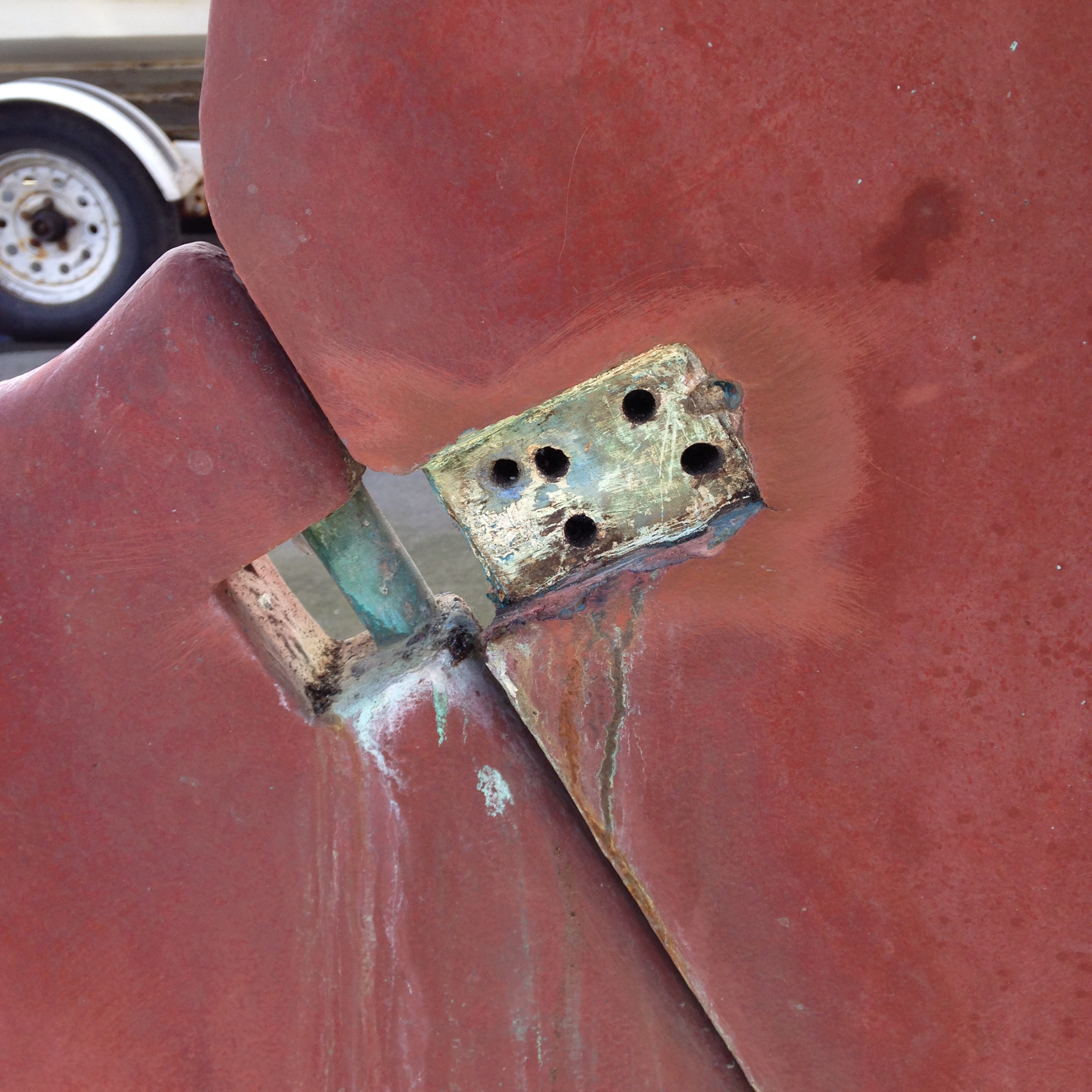
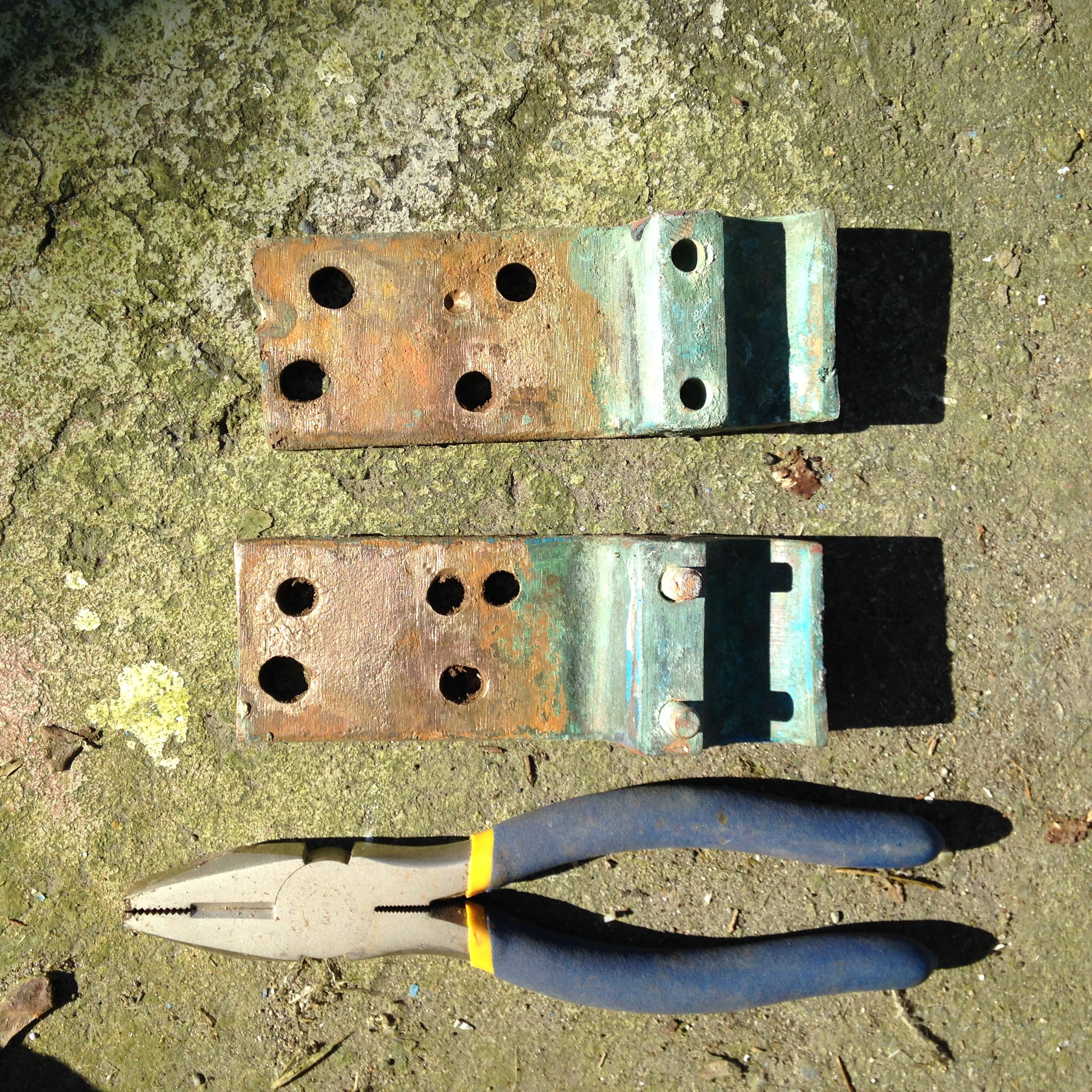
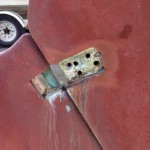
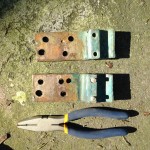
All electrical wiring from fore and aft of engine room removed. Rudder gudgeon removed and cleaned (appears to be okay to reuse, corrosion was isolated to the nuts and bolts)
IMG_0810IMG_0814


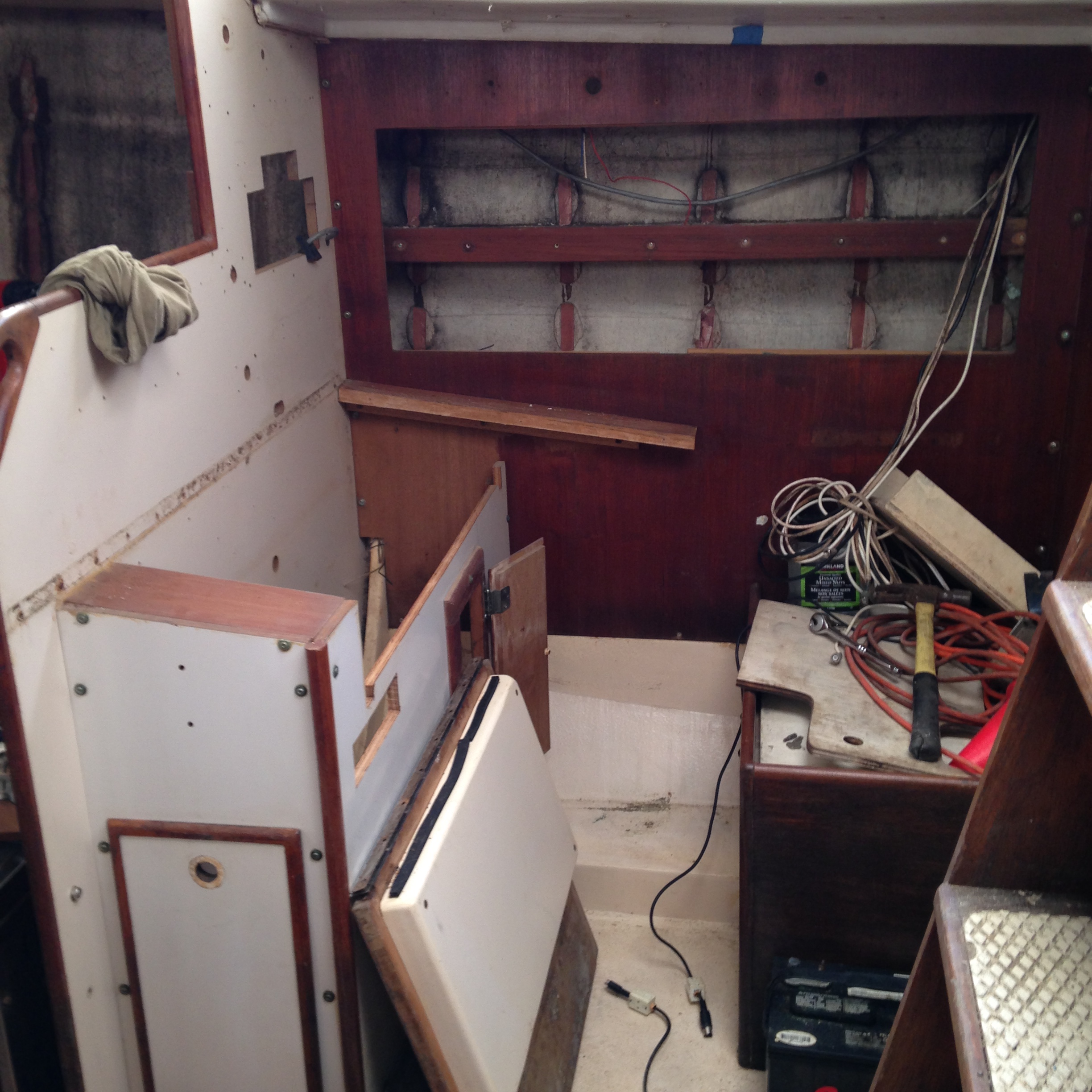
Navigation station dismantled.

IMG_0819


Shore power cut. 😉

Counting Stars

Last night we visited Denis and Rosario aboard Counting Stars for a few cocktails and dinner. What a fantastic evening, thank you so much! Counting Stars is in beautiful condition and it is hard to comprehend that Akupara will someday resemble the same, but having the opportunity to visit a Whitby in such fine condition has refreshed the drive to get Akupara completed. Just as soon as the cobwebs from last night clear a bit anyway 😉

This was actually the first time Andrea and I have been aboard a Whitby 42 while it is afloat, and we were not disappointed! Counting Stars is as solid as we expected and barely nods “Hello” to you when you come aboard, which is exactly what we had read in all of our research.

Andrea and I spotted many similarities and also a few differences between Akupara and Counting Stars, and we also saw a lot of great ideas that we will steal and incorporate into Akupara, up to and including the hard dodger, I think.

There were 2 other guests as well last night and with 6 people aboard, there was still lots of room for all of us both in the cockpit and in the main salon! This is exactly why we went with a Whitby 42, but it is always different, actually experiencing it, as opposed to just thinking about it!

We shared a lot of good stories, a lot of laughs, I think more than a few bottles of wine, and as the night grew longer, I think the length of some of the tall tails grew in unison, which ended in a few calls of “BS” from some of us! But it was all in good fun and always ended in more laughs!

We can’t wait to return the invitation and have Denis and Rosario over for dinner on Akupara, but it will be a little while yet! 😉

Weird going to a boat directly from work in nice clothes and  leaving just as clean as when you arrived. After a while you begin to think that all boats require dedicated dirty work clothes just to visit! 😉

As we made our way home, we spoke about how this is what it is going to be like in the future when we are actually out cruising, and why we are working so hard now to make it happen.

Great boats, great people, great laughter, and great anchorages, and maybe a tall tale or two thrown in for good measure!

Thanks again guys, the break was truly appreciated!!


Shocking…

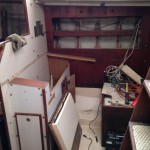
We have been pretty busy as of late which has kept me away from updating the blog, so my apologies. The last two weekends have been spent continuing to remove the interior panels, bringing them home, and now the electrical stripping has begun. I figure we have one more trip to bring home the rest of the pieces.

IMG_0800IMG_0801


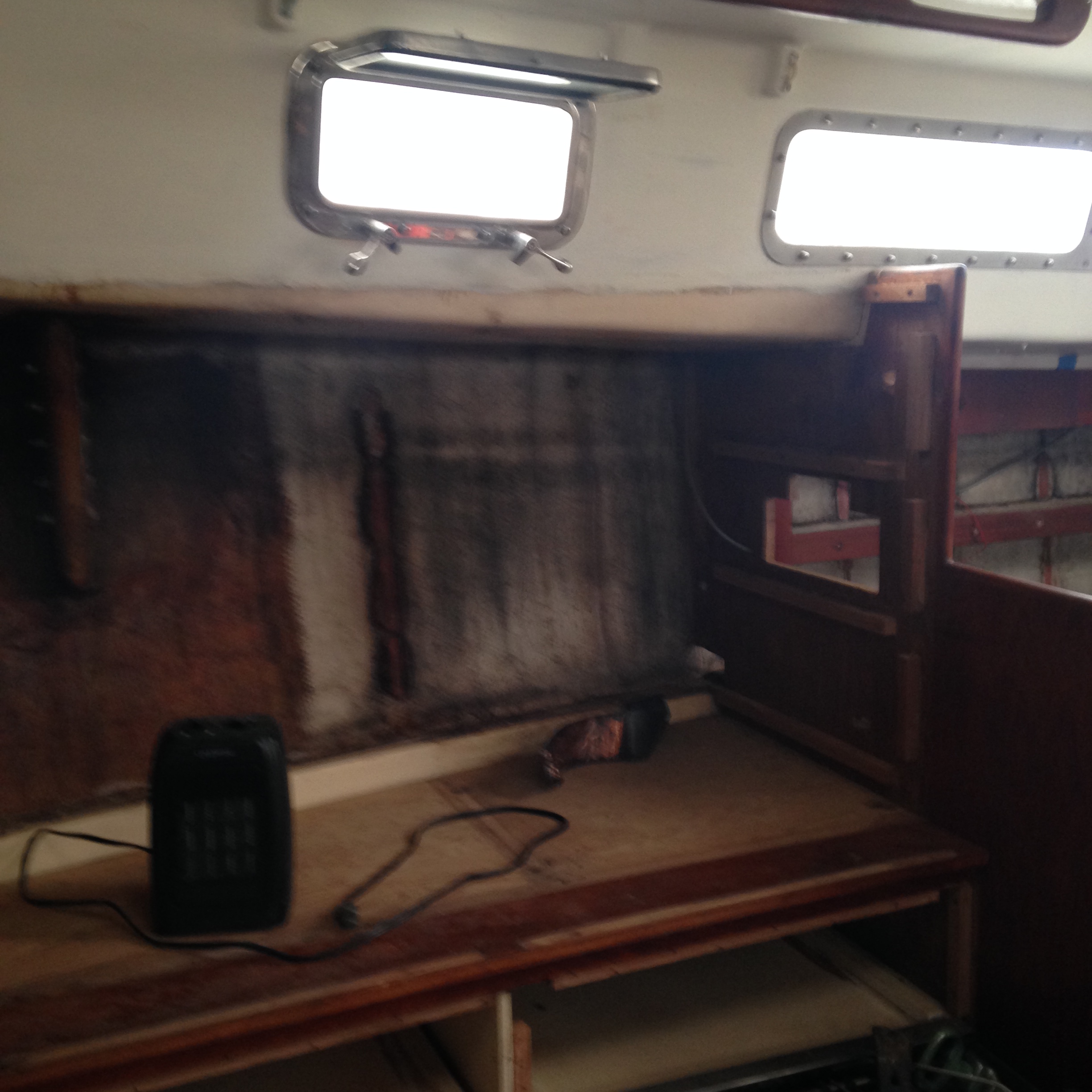
So far we have managed to remove all of the 12 volt wiring, as well as the 110 volt wiring on the starboard side,  from the nav station area forward. The port side is back to the main cabin bulkhead between the foreward head and the main cabin. It is amazing how long it takes to actually get this stuff out. The old electrical boxes are badly corroded and the majority of the screws are pretty rusty. The AC wiring is some of the thickest, most hard to cut stuff I have seen in a long time, but seeing as how it is 38 years old, it has to go. Which means that even with all of the interior panels out, we still need to twist and contort to odd angles and positions in order to remove it. It is fastened very well! We have also had to go a little bit deeper into the removal of panels than I was originally intending, but hey, in for a penny, in for a pound!

IMG_0803

Over the last couple of months the battery bank has slowly gone down more and more so on Sunday I decided to try to charge it a bit using a standard automotive charger seeing as how the electrical is 1/4 gone and I have loose wires hanging everywhere, I am unable to plug in the shore power of course. The little charger managed to put a bit of life back into the batteries, we will see just how much this weekend. However it gave me enough that I was able to pump the bilge out, and just for the hell of it, turn the ignition key.

The good news is that the engine turned over – barely. So at least we know that it is not seized and that the starting system is correct. if we decide to try to keep it, we have are a little farther ahead, but it will obviously require a lot of TLC before we try to start it for real.

Our basement is slowly becoming inhabitable. It is filled with more boat parts than I care to mention and at some point we are going to need to take a boat day, and use it to organize the basement so that we can start making some progress on rejuvenating all of the bits and pieces.

I am eagerly awaiting for the day when we have enough of the interior removed and stripped away, that it makes sense to pressure wash inside to remove the years of grime and filth. Almost there I think, not counting the engine room yet.